Subterranean termite bait station monitoring provides continuous structural defense for Katy slab-on-grade homes without broadcasting hundreds of gallons of chemical liquid into residential lawns. In master-planned…
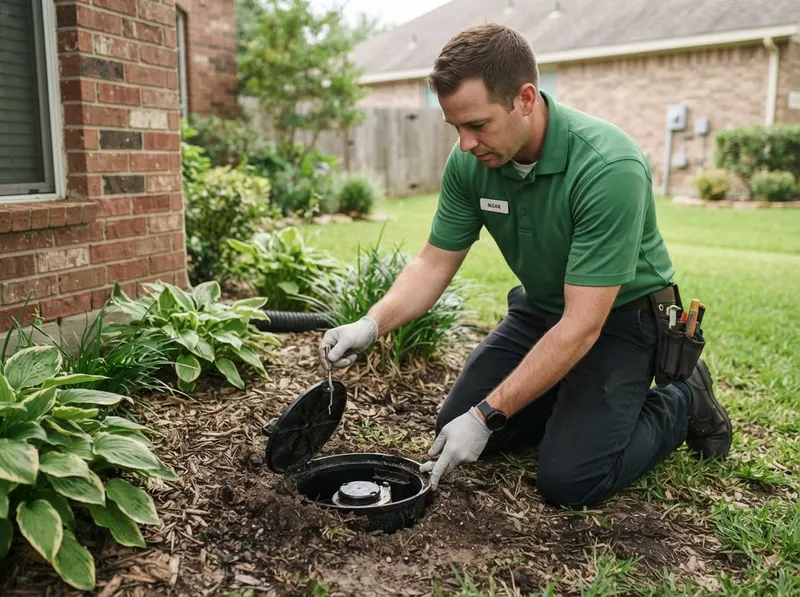
Subterranean termite bait station monitoring provides continuous structural defense for Katy slab-on-grade homes without broadcasting hundreds of gallons of chemical liquid into residential lawns. In master-planned developments across Cinco Ranch, Elyson, and Firethorne, expansion joints, exterior brick weep holes, and plumbing penetrations through post-tension concrete slabs serve as direct entry conduits for subterranean colonies. Unlike reactive liquid soil drenches that require drilling holes through interior tile or outdoor decorative patios, tamper-resistant bait stations remain secured flush with turf or mulch beds, entirely safe around domestic pets and children. The system relies on subterranean workers sharing chitin-synthesis inhibitors with the reproductive core of the colony, achieving complete colony elimination rather than merely repelling foragers.
Local soil geology heavily influences subterranean colony pressure throughout Fort Bend and Harris County sectors of Katy. Expansive Beaumont and Lake Charles clay soils common to communities like Grand Lakes, WoodCreek Reserve, and Silver Ranch shift dramatically between wet springs and dry summer spells. This natural soil movement fractures perimeter liquid repellent barriers, opening microscopic subterranean access avenues directly into wall studs. In-ground bait stations bypass the limitations of shifting soils by maintaining consistent monitoring intercepts along the drip line. Station spacing is calibrated between 10 and 15 feet to match worker foraging radiuses, particularly near sprinkler run-off zones and mature landscape beds where soil moisture remains elevated year-round.
Choosing bait monitoring over liquid trenching represents a clear operational trade-off. Liquid termiticide trenching provides an immediate chemical envelope within 24 hours, making it the necessary protocol for active, severe indoor structural breaches inside living-room drywall. However, continuous bait monitoring serves as the superior preventive defense for homes lacking an active infestation, eliminating the need to pump up to 4 gallons of termiticide per 10 linear feet around back patios and pool decks. The monitoring service requires scheduled visits, typically semi-annual or quarterly, to inspect the cellulose cartridges for foraging activity and replace intercepted cores with active bait matrices. Homeowners in Pine Mill Ranch and Cane Island gain structural protection without locked multi-year cancellation penalties or broad-spectrum pesticide exposure.
Every job gets a firm, written price after a free on-site visit.
Tell us about your subterranean termite bait station monitoring job in Katy and we'll send a clear, written quote, usually the same day.
 Lone Creek Pest Control