Securing a residential property against structural infestation requires an understanding of regional soil hydration, building foundations, and insect breeding patterns. Homeowners seeking a pest control service in Katy receive targeted physical perimeter defenses and precision applications engineered specifically for local Gulf Coast climate dynamics.
Pest Control Service in Katy is an integrated pest management and physical exclusion protocol designed to eliminate active insect or rodent infestations and seal residential building envelopes against recurring sub-tropical pest pressure.
Every service reflects the same meticulous attention to detail, whether it's a single job or a larger pest control service project across Katy.
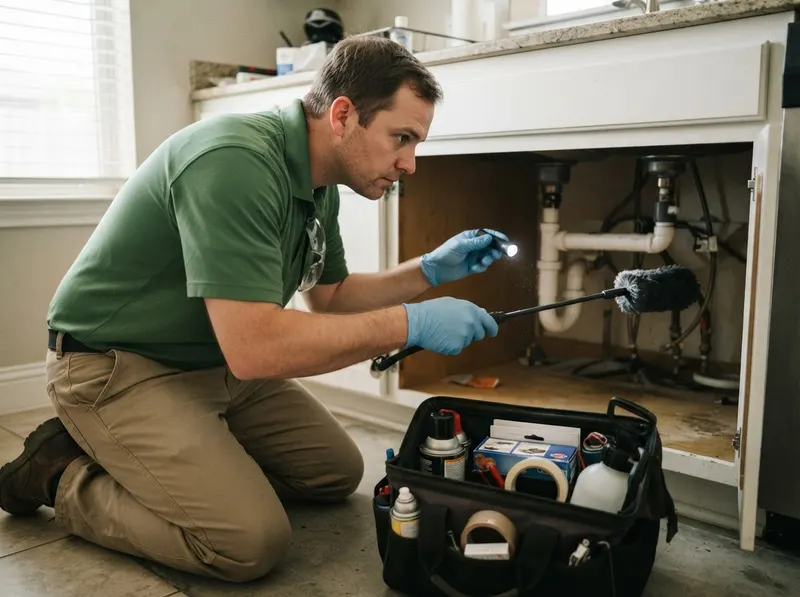
Targeted baiting protocols and juvenile hormone regulators eliminate German, American, and Oriental cockroach populations from interior cabinetry, sub-slab plumbing penetrations, and kitchen wall voids without airborne broadcast residues. Technicians begin by mapping harborage zones behind major kitchen appliances, motor housings, and pantry framing where heat and moisture concentrate. Precision applications utilize non-repellent matrix gels containing abamectin or indoxacarb, placed directly into structural hinges, void seams, and under-counter fasteners where roaches feed and groom. In cases of established German cockroach populations, specialized insect growth regulators (IGRs) like pyriproxyfen disrupt the nymphal molting cycle, rendering adult females sterile and terminating reproduction cycles permanently within 21 to 30 days. American and smokybrown roaches entering from sewer connections or attic overhangs are targeted at their ingress points through the deployment of dry micro-flowable dusts within plumbing access walls and mechanical drop ceilings, neutralizing harborage without distributing fine chemical particles across exposed food preparation surfaces or child play zones.
Get a quote →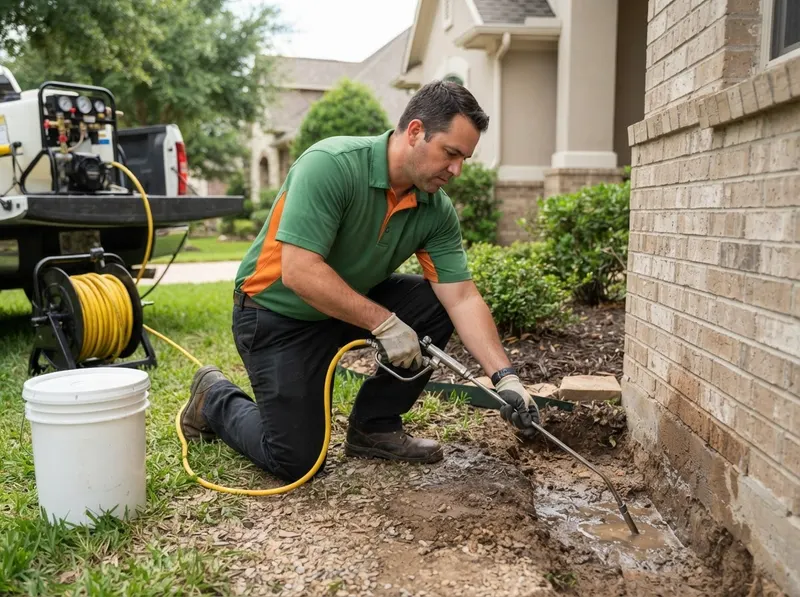
Continuous chemical soil trenching and foundation drilling introduce non-repellent termiticides that transfer through foraging worker colonies, halting structural wood consumption along post-tension concrete slabs. Subterranean termites construct subterranean shelter tubes out of soil particles and saliva to traverse concrete slab edges and brick veneers undetected. A continuous chemical treatment zone is installed by excavating a six-inch-wide, six-inch-deep trench along the perimeter foundation beam, soaking the backfill with non-repellent fipronil formulations at calibrated label rates of four gallons per ten linear feet. Where concrete driveways, entry patios, or air conditioning slabs abut the exterior brick line, specialized sub-slab drilling equipment penetrates slabs at twelve-inch intervals, enabling deep pressure-injection of liquid barriers directly to the underlying grade soil. Because worker termites cannot detect the active ingredient, foraging insects walk through the treated perimeter, carry micro-particles back into deep subterranean nests, and share the compound through social grooming (trophallaxis), systematically collapsing the primary colony and queen within 60 to 90 days.
Get a quote →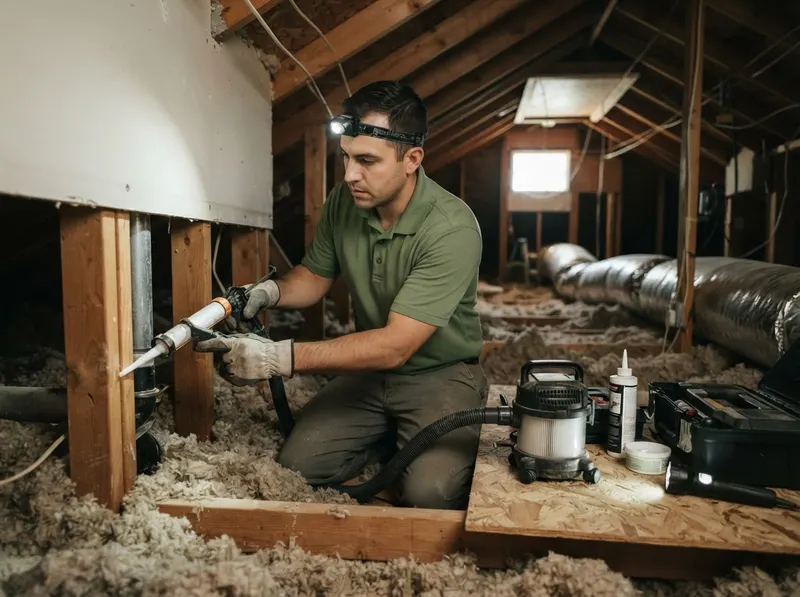
Full structural sealing using heavy-gauge wire mesh secures roof returns, ridge vents, and soffits against roof rats and house mice, followed by bio-enzymatic cleanup of contaminated attic insulation. Rodent management begins with an exhaustive forensic attic and roofline audit to identify greasy sebum trails, gnaw patterns, and fecal droppings that signify established roof rat entry paths. All identified roof return eaves, frieze-board separations, plumbing pipe boots, and attic ridge vents are permanently sealed using 1/4-inch galvanized steel hardware cloth, structural exterior flashing, and elastomeric sealants that resist rodent gnawing. Inside the attic envelope, snap-trap arrays baited with non-toxic attractants capture remaining trapped rodents within the structure over a targeted 5- to 10-day monitoring period, avoiding toxic rodenticides that risk rodents dying inside drywall cavities. Following successful trapping, technicians execute targeted bio-enzymatic misting across contaminated insulation corridors, breaking down pheromone markers, neutralizing zoonotic pathogens, and eliminating foul odors without requiring complete insulation removal in localized breach areas.
Get a quote →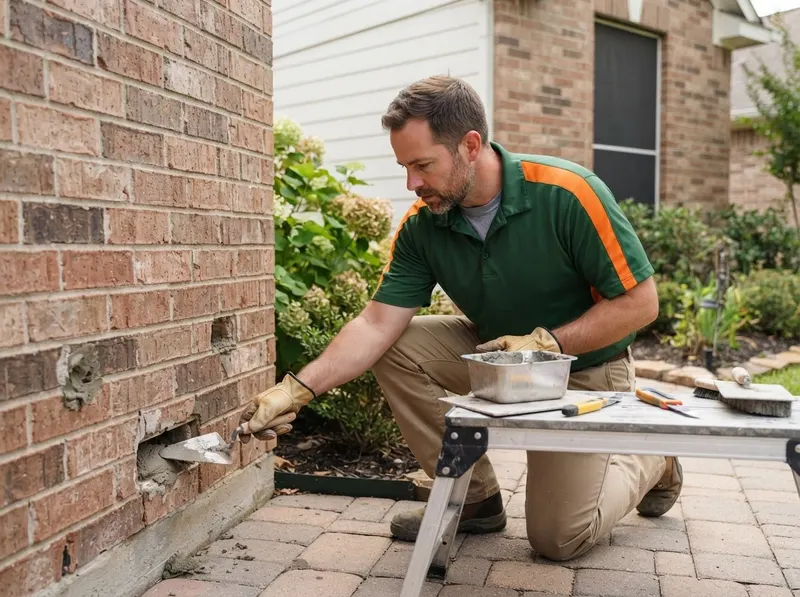
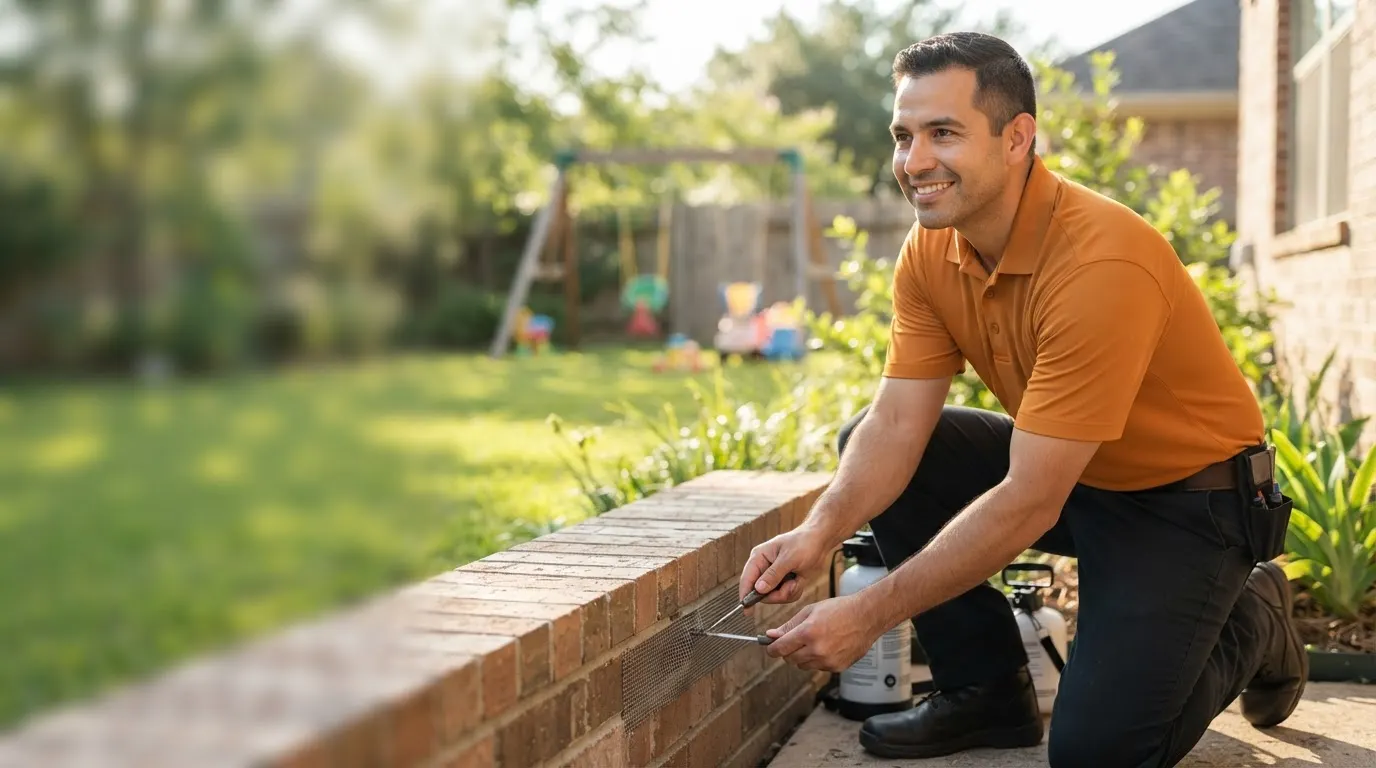
Installation of precision-fitted stainless steel weep hole inserts prevents scorpions, large roaches, and rodents from traversing the air gap between exterior masonry and interior framing. Standard residential masonry construction requires open vertical drainage weep holes along the lowest course of brickwork directly above the concrete foundation beam to allow drainage and airflow within the wall cavity. These open weep gaps, measuring 0.5 to 0.75 inches wide, serve as primary superhighways for American cockroaches, silverfish, striped bark scorpions, and field mice looking to bypass perimeter soil treatments. The exclusion protocol utilizes tension-fit, heavy-gauge stainless steel wire mesh inserts cut to exact mortar dimensions and tapped flush into every open weep channel around the structural footprint. These precision inserts preserve essential water drainage and cavity ventilation while presenting an impenetrable barrier against crawling pests and gnawing rodents, completely stopping pest migration between the exterior brick veneer and internal drywall frames without altering architectural aesthetics or violating brick masonry codes.
Get a quote →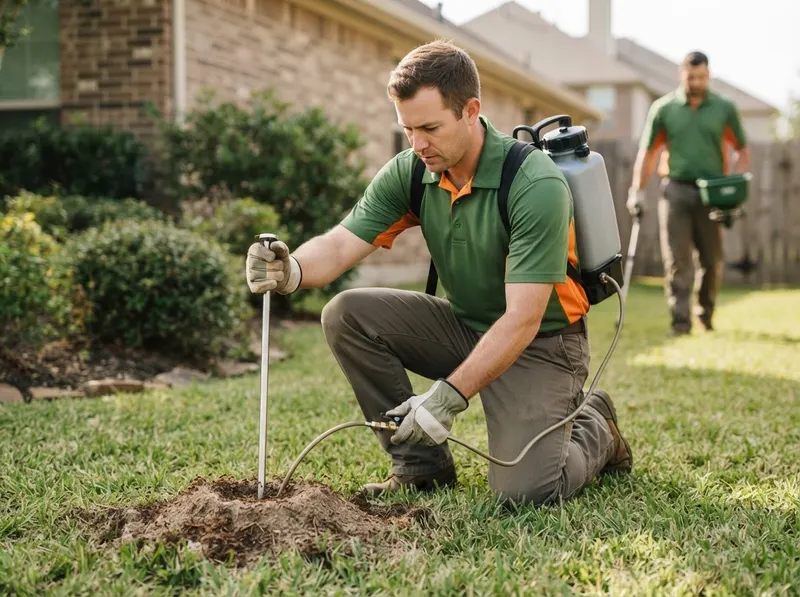
Granular bait applications distributed across residential turf acreage disrupt reproductive queen fertility across underground mound networks, eliminating turf hazards for children and household pets. Red imported fire ant colonies produce extensive subterranean gallery networks that undermine turf roots, crack landscape paver foundations, and aggressively defend surface mounds through coordinated, painful stings. Rather than using conventional high-volume contact poisons that trigger mound splitting and secondary budding, scientific turf mitigation utilizes broadcast applications of low-toxicity insect growth regulators and slow-acting metabolic inhibitors such as hydramethylnon or methoprene. Foraging worker ants collect these oil-based granular baits and feed them directly to the subterranean reproductive queen, halting new egg production and inducing complete colony starvation over a four- to six-week duration. Perimeter turf borders, play structures, and garden walkways receive targeted mound drenching or precision granular placement, ensuring full property safety and preventing outdoor turf areas from becoming hazardous zones for barefoot children and companion animals.
Get a quote →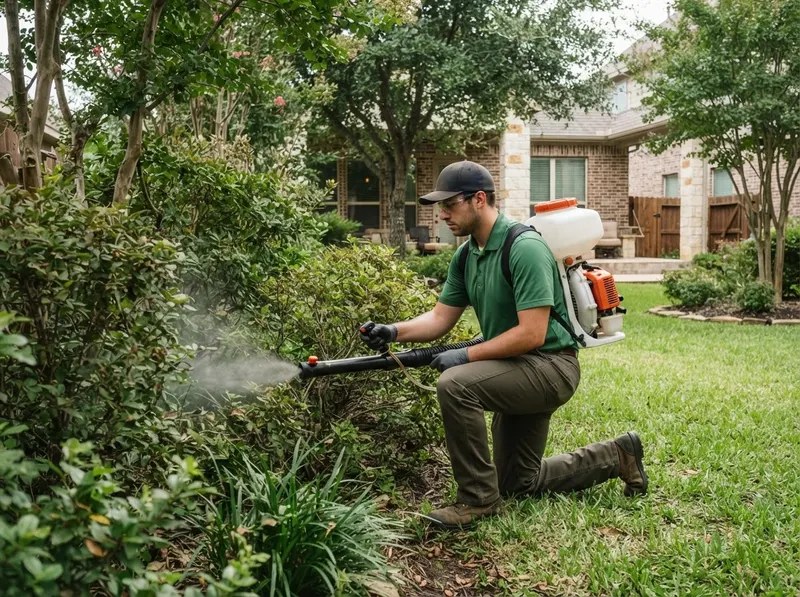
Micro-encapsulated adulticides and microbial larvicides applied to landscape shrubs and shaded stormwater drainage corridors break the active breeding cycle of Culex and Aedes mosquito vectors. Mosquito management requires a dual-phase approach focusing on both flying adult resting habitats and nearby standing water sources. Technicians utilize commercial backpack blowers to apply a targeted, fine-droplet micro-encapsulated pyrethroid formulation directly to the undersides of dense ornamental shrubbery, shaded tree canopies, covered patios, and exterior eaves where mosquitoes rest during the hottest daylight hours. The micro-encapsulation technology shields the active formula against rapid breakdown from intense sun exposure and rain events, sustaining continuous residual adult suppression for up to 28 days. Simultaneously, all low-lying drainage catch basins, french drain outlets, and retention swales receive biological larvicidal briquettes containing Bacillus thuringiensis israelensis (BTI), which target mosquito larvae without harming beneficial pollinators, aquatic organisms, or domestic pets drinking runoff water.
Get a quote →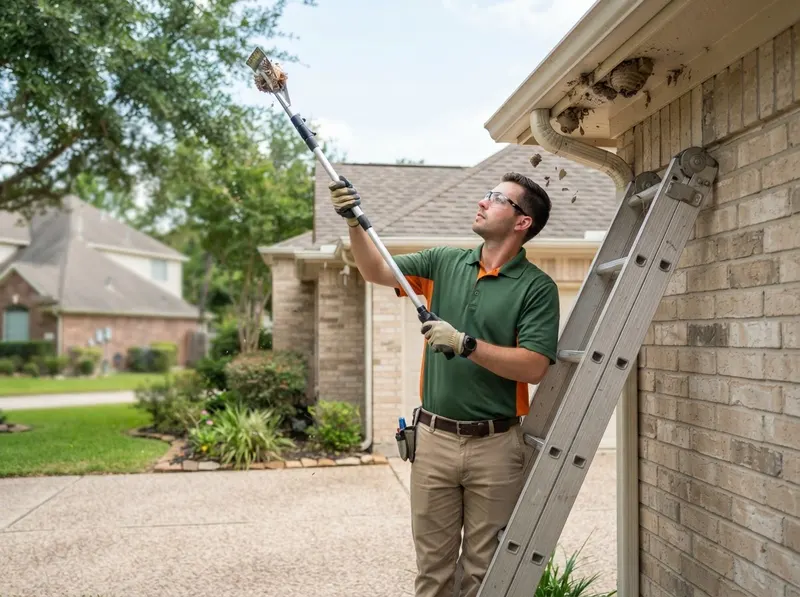
Mechanical clearing of stinging insect nests from two-story roofline soffits, entry arches, and covered patio structures paired with residual repellent barriers to suppress re-nesting behavior. Stinging paper wasps and aggressive yellow jackets frequently colonize elevated architectural eaves, exterior window trim, utility electrical meters, and decorative patio ceilings. Technicians utilize extendable telescopic poles reaching up to 30 feet to physically remove paper wasp nests, mud dauber dirt casings, and spider webbing from the entire exterior roofline and window trim. Immediately following mechanical removal, structural eave returns and recessed corners receive precision applications of residual pyrethroid sprays or wettable powders designed to repel returning foragers and inhibit pheromone-guided nest reconstruction. Treating nesting zones before spring territorial expansion prevents colonies from swelling to multi-queen structures, protecting family outdoor activities and keeping service technicians, package couriers, and outdoor visitors safe from painful stings along high-traffic building entryways.
Get a quote →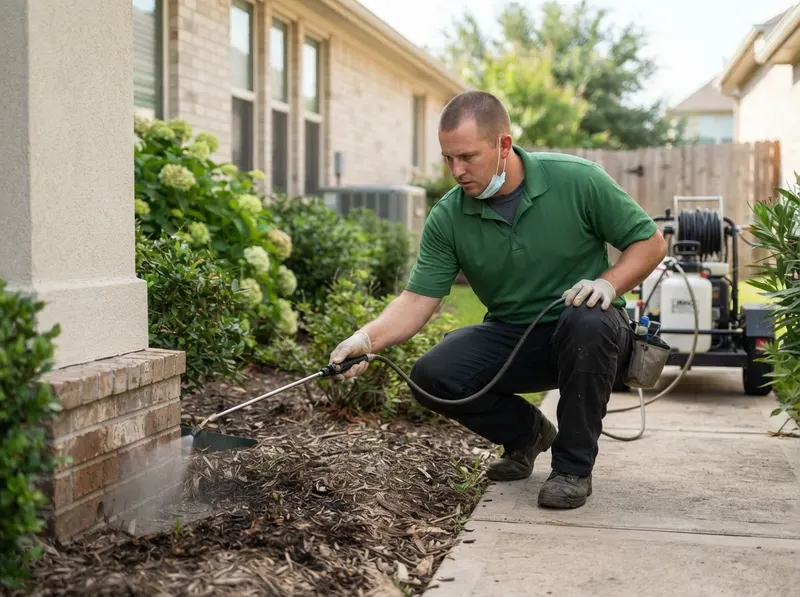
A multi-zone protective perimeter extending three feet up the exterior foundation slab and six feet outward through perimeter mulch beds intercepts perimeter crawlers before structural entry occurs. Exterior perimeter management establishes a dual-ring defensive perimeter around the home envelope using advanced water-resistant synthetic pyrethroids combined with long-lasting crystalline granules. The primary liquid band coats the exposed concrete foundation beam up to three feet high, filling micro-crevices where spiders, pillbugs, and earwigs navigate slab lines. The secondary band extends out six feet through surrounding flower beds, bark mulch, and groundcover vegetation, targeting crawling insects at the soil-to-mulch transition zone where organic moisture attracts roaches, crickets, and millipedes. Specialized water-activated granules are swept through dense organic turf and landscaped stone paths, steadily releasing low concentrations of active ingredients as landscape irrigation runs. This exterior defense stops outdoor pests before they contact the house siding or seek interior harborage.
Get a quote →You get a firm, itemized quote for your pest control service before any work begins, no surprises, no pressure.
Careful prep, tidy work, and a full cleanup when we are done. We treat your home and belongings like our own.
The same trusted, background-checked team from the first call to the final check.
Selecting the proper level of intervention depends on whether a structure is experiencing an active indoor breeding population or seasonal perimeter pressure from surrounding prairie and retention areas. If an active interior infestation exists, such as German cockroaches nesting in kitchen appliances, roof rats running through attic insulation, or subterranean termite mud tubes ascending slab foundations, choose a specialized corrective cleanout and physical exclusion protocol. If the living envelope is currently unbreached but exterior insect pressure threatens the perimeter due to seasonal swarms, standing drainage easements, or heavy mulch beds, choose an ongoing barrier defense plan.
The practical trade-off centers on intervention depth versus continuous maintenance: single-event corrective remediation requires invasive interior void dusting, extensive cabinet clearing, and physical mechanical sealing at a higher upfront procedural cost, whereas quarterly perimeter defense limits product placement entirely to the home's exterior envelope without interior scheduling disruptions, provided the indoor living space has not already been compromised. When confronting wood-destroying organisms like eastern subterranean termites, choosing localized spot foaming over a continuous trench-and-rod liquid barrier saves initial expense but leaves non-treated foundation gaps vulnerable to subterranean entry along adjacent slab stress cracks. For rodent intrusions, selecting recurring toxic bait traps instead of full physical entry-point exclusion provides temporary population suppression while leaving structural roofline returns and soffits accessible to new litters moving from nearby greenbelts.
Homeowners weighing lawn turf treatments against foundation perimeter barriers must balance broad surface insect management against direct structural protection: whole-yard broadcast treatments temporarily reduce superficial ant foraging across open turf but degrade rapidly under heavy summer heat, whereas concentrated micro-encapsulated foundation barriers provide resilient chemical and mechanical defense against pests actively targeting interior living spaces.
Every project gets a firm, written price after a free on-site visit. Ranges below for orientation.
Tell us about your pest control service job and we'll send a clear, written quote, usually the same day. Or just call and talk to a real Katy pro.
(346) 827-0060
Properties throughout Katy sit on high-clay alluvial soils that experience severe expansion during wet periods and deep structural shrinkage during summer heat waves. These soil movements cause micro-fractures along monolithic post-tension concrete slabs, giving subterranean termites direct access to internal framing while subterranean drainage swales, lakes, and detention basins near Cane Island and Cinco Ranch maintain elevated humidity levels that fuel heavy German roach and rodent pressure against residential brick veneer weep systems. The unique construction profile across master-planned communities in Fort Bend, Harris, and Waller Counties combines heavy brick veneer over wood framing with complex multi-ridge rooflines, generating distinct structural vulnerabilities. Subdivisions bordered by natural bayou tributaries, such as Buffalo Bayou easements near Cinco Ranch and Cane Island Creek near older Katy township tracts, experience seasonal surges in roof rat populations when winter temperatures force rodents out of riparian brush into attic insulation. In newly developed sectors north of Interstate 10, including Elyson and Firethorne, former agricultural rice and prairie fields maintain established populations of Rasberry crazy ants and subterranean termites that immediately attack newly placed residential sod and untreated perimeter expansion joints. Furthermore, the mandatory installation of exterior brick weep holes across local municipal building codes creates an open entryway for American smokybrown roaches and scorpions unless custom mechanical exclusion barriers are fitted flush against the foundation edge.
Free estimates for Katy & the surrounding area.
 Lone Creek Pest Control